

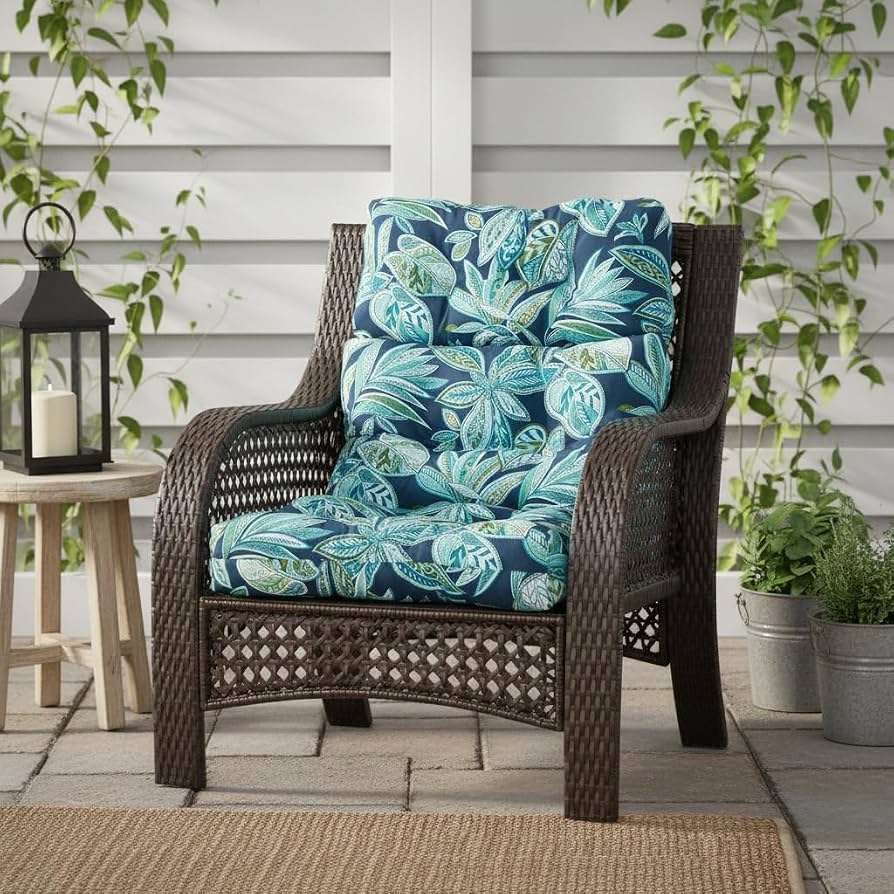
There is a certain moment most wicker furniture owners know well. You find a set of cushions online, the price looks reasonable, the color is close enough, and you place the order feeling pretty good about it. Then the package arrives. You pull out the cushion, set it on the chair, and it either hangs over the edges or leaves a noticeable gap on one side. That frustration is so common it might as well be a rite of passage. Shopping for wicker chair cushions turns out to be a lot trickier than it looks, and most people only find that out after their first failed attempt.
So why is it so hard? And more importantly, how do you actually get it right?
Key Takeaways
- Wicker chairs are manufactured in non-standard seat shapes, which makes off-the-shelf cushions a poor fit for most frames.
- Brand-specific wicker furniture, like Lloyd Flanders, often requires cushions made to match the original dimensions of that particular collection.
- Measuring wicker seats requires a different approach than measuring standard dining or kitchen chairs.
- Fabric choice matters as much as size, especially for furniture that lives outdoors or in a sunroom with significant light exposure.
- Buying custom-made replacement cushions is often the most practical path to getting a cushion that fits properly and lasts.
- Ordering fabric swatches before committing to a full order can save you from a costly mismatch.
The Real Reason Standard Cushions Almost Never Fit Wicker Chairs
Walk into any big-box store or browse a general home goods website and you will find outdoor seat cushions in a handful of standard sizes, typically 14×14, 16×16, 18×18, and a few rectangular variations. Those dimensions work reasonably well for most slatted metal chairs or standard dining chairs with flat, square seats.
Wicker chairs are a different story.
Wicker furniture, whether it is made from natural rattan, resin wicker, or aluminum-framed wicker weave, tends to have seat shapes that are tapered, rounded, or uniquely contoured to the frame. The seat might be wider at the front than at the back, or it might have a slight curve to match the inside of a wraparound arm. Some styles have a lip or ridge where the cushion needs to sit, and a standard square cushion simply has nowhere to go.
Beyond the shape issue, there is also the brand-specific problem. Furniture manufacturers like Lloyd Flanders, Woodard, and Brown Jordan design their pieces with proprietary dimensions. The seat depth on a Lloyd Flanders Reflections chair, for instance, is not going to match the seat depth on a generic piece from a discount retailer. That gap in standardization is exactly why so many replacement cushion searches end in disappointment.
According to the American Home Furnishings Alliance, the outdoor furniture market has seen steady growth, with more homeowners investing in quality patio and sunroom pieces they intend to keep for many years. The longer people hold onto their wicker furniture, the more relevant the cushion replacement challenge becomes, because original cushions eventually wear out regardless of how well the frames hold up.
Why Wicker Furniture Is Built to Last Longer Than Its Cushions
This is worth pausing on, because it changes how you should think about the cushion shopping process.
A well-made wicker or rattan frame can last 15, 20, even 30 years when it is properly cared for. The frame is the furniture. The cushions, on the other hand, are subject to UV exposure, moisture, body weight, and general wear in a way the frame never is. The foam compresses over time. The fabric fades. The ties stretch. So at some point, even the most beautiful and well-maintained wicker set is going to need new cushions, and the original manufacturer may no longer carry them.
That is a very specific problem, and generic off-the-shelf options are not built to solve it.
This is also why the “just buy covers” approach falls short more often than people expect. If the foam inside your cushion has already broken down, a new fabric cover will lay over a collapsed, misshapen core. It will not restore the comfort, it will not look quite right, and the cover is likely to wear unevenly because the foam no longer holds its shape. For a true refresh, both the foam and the fabric need to be replaced together.
What Makes Wicker Chair Seats So Difficult to Measure
Even for people who do everything right and decide to order a custom replacement, measuring a wicker chair seat is not always intuitive. A few things catch shoppers off guard.
The seat is not always a rectangle. Many wicker chair seats are narrower at the back than at the front. If you only measure the widest point and order accordingly, the cushion will overhang the back of the seat. You need both the front width and the back width, as well as the depth from front to back.
The frame takes up space. On many wicker chairs, the arms and the back weave extend inward slightly over the seat. That means the cushion needs to fit the usable sitting area, not the full outer frame dimension. Measuring from arm rest to arm rest at seat level, rather than measuring the outside of the frame, gives you a more accurate number.
Thickness is not decorative. Some shoppers treat foam thickness as a stylistic choice, like choosing between a thick or thin mattress topper. In reality, the right thickness depends on the depth of the seat recess. Some wicker frames have a deeper seat area that can accommodate a 4-inch or 5-inch cushion. Others have a shallower recess, and a thicker cushion will wobble or not seat properly at all. Getting this measurement right matters for both comfort and appearance.
Ties and tuck tabs need to match the chair’s attachment points. Many wicker chairs have holes in the back rail or small built-in hooks where cushion ties are meant to loop. If your new cushion has ties in the wrong position, or none at all, it will shift every time someone sits down or gets up.
A Simple Measuring Guide to Help You Get It Right
Before ordering any replacement cushion for a wicker chair, gather these measurements:
- Seat width at the front edge (widest point)
- Seat width at the back edge (where the back of the cushion will sit)
- Seat depth from the front edge to the back rail, measured along the seat surface
- Seat recess depth if the seat has a well or frame edge, measure how deep it is from the top of the frame rail down to the seat base
- Location of any tie holes or attachment points on the chair frame
Taking photos alongside your measurements is genuinely helpful when you are ordering from a retailer or speaking with a customer service team. A picture of the seat from above and from the front gives the person helping you a clear reference to work from, especially if your chair is a less common style.
Fabric Matters More Than Most People Expect
Once you have the sizing figured out, fabric selection is where a lot of people relax too early. For outdoor or sunroom use, the fabric you choose directly affects how long the cushion stays looking good.
Performance outdoor fabrics are specifically engineered to resist fading from UV exposure, repel water, resist mildew, and clean up without a lot of fuss. Sunbrella is one of the best-known names in this category, and for good reason. Independent testing has shown that solution-dyed acrylic fabrics like Sunbrella retain their color significantly longer than standard polyester options when exposed to direct sunlight over time.
For a sunroom setting where the furniture gets indirect light and is protected from rain, you have slightly more flexibility with fabric choice. But for a fully outdoor setup, investing in a true outdoor-performance fabric is worth every dollar. A cheaper fabric that fades in one season will cost more in the long run than a durable option that holds up for years.
Pattern selection is also worth some thought. Wicker furniture tends to have a strong visual presence on its own, and the right cushion pattern can either complement the natural texture of the weave or provide a striking contrast. Traditional floral patterns, simple stripes, and solid colors in neutral or coastal tones tend to work beautifully with wicker because they let the texture of the furniture stay in the conversation rather than competing with it.
Why Custom-Made Is Often the Most Practical Choice
Given everything above, it becomes clear why custom-made replacement cushions exist as a product category in the first place. Standard sizes solve a standard problem. Wicker chair cushions, especially for brand-name furniture with specific collection dimensions, are not a standard problem.
Working with a retailer who specializes in made-to-order cushions means you provide your measurements, choose your fabric and fill thickness, and receive a cushion built to fit your specific chair rather than a generic template. That process takes a little more time upfront than ordering something off a shelf, but the result is a cushion that fits correctly, looks intentional, and lasts as long as the foam and fabric allow.
American-made cushion manufacturers, particularly those with in-house production, also give you more transparency into what goes into the product. When a cushion is made domestically to order, you can ask questions about foam density, fabric sourcing, and construction before you buy, rather than trying to decode a vague product listing. That kind of informed purchasing is a real advantage when you are trying to protect a piece of furniture you care about.
One Last Thing Worth Knowing: You Do Not Always Have to Replace the Whole Set
One of the most common concerns people share when they start the replacement process is the worry that they will have to redo everything at once. In reality, most specialty cushion retailers can make a single replacement cushion to match the rest of a set. If one chair in your set took more wear than the others, or if you just need to replace the seat cushion on a sofa while the back cushions are still holding up, that is a completely reasonable order to place.
Knowing that you can buy one piece without committing to a full refresh makes the process feel a lot less overwhelming, and it protects your investment in the furniture without forcing a larger project than you are ready for.
The Bottom Line
Wicker chair cushions are harder to find than standard seat cushions because wicker furniture was never designed around standard dimensions. The shapes are irregular, the brands are proprietary, and the measuring process has details that are easy to miss. But none of that means the search has to be frustrating.
When you go in with accurate measurements, a clear understanding of your fabric options, and the willingness to explore made-to-order sources, you are not guessing anymore. You are making a deliberate, informed choice, and the cushion you end up with will show it.

Comments are closed.